

Shop / Plug’n’play lessons / Decision-making
Enhance your training program with our detailed lesson plan on Decision Making. Specifically designed for Crew Resource Management (CRM) training, this lesson plan is equally suitable for a wide range of safety-critical industries where non-technical skills are crucial.
+ Main topic: Decision-making
+ Related topics: Workload management; stress and stress management; situational awareness; information acquisition and processing
+ Training length: 40 – 50 minutes
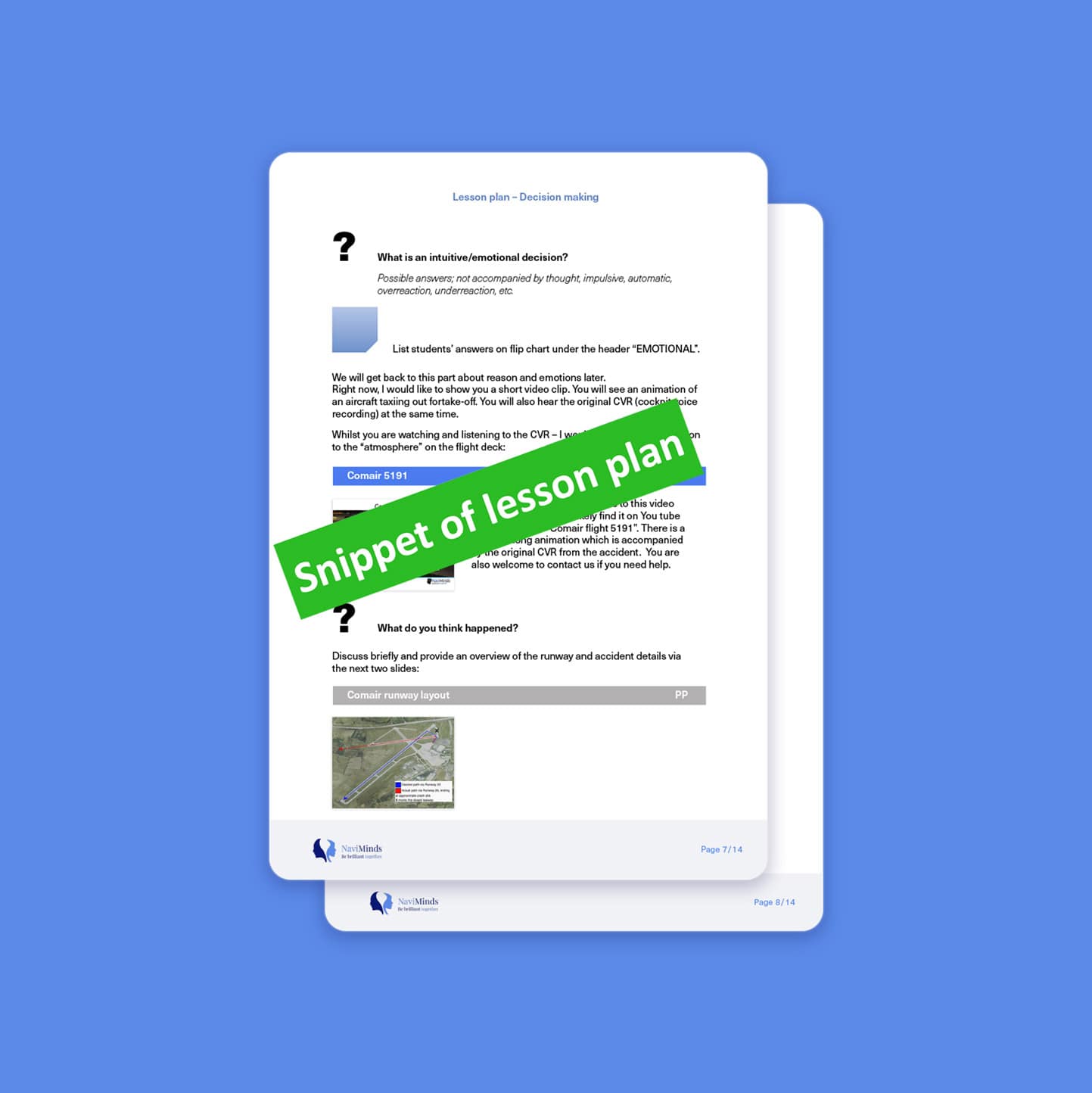
+ Included: 2x student handouts, lesson plan with instructor notes, PowerPoint slides
+ Access: Instant download after payment
+ File formats: Pdf and PowerPoint
This lesson plan includes extensive training material focused on the essential aspects of decision-making
Easily implement the provided lesson plan with fully guided trainer notes, ensuring a seamless training experience
While tailored for crew resource management training, this lesson plan’s principles and strategies are applicable to various sectors, making it a versatile addition to any safety-critical training program
Use real-life case studies, group activities, and videos to promote active participation and engagement
Workload Management: Understand how to effectively manage workload to improve decision-making processes.
Situational Awareness: Improve situational awareness to enhance the quality of decisions made in critical moments.
Decision-making: Examine the differences between rational and emotional decision-making to increase awareness of the impact of emotions on decision-making. Includes studies on factors influencing our ability to make sound decisions.
Ready-to-distribute handout to enhance learning about various emotions and how these impact decisions during both normal operations and emergencies.
Comprehensive slides to guide the training sessions.
Contains a quick exercise where students get to reflect on why they make the decisions they do.
Provides a real-life case from aviation to examine the decision-making process and the factors that impacted these processes.
Ready-to-distribute handout to enhance learning about various emotions and how these impact decisions during both normal operations and emergencies.
Comprehensive slides to guide the training sessions.
Contains a quick exercise where students get to reflect on why they make the decisions they do.
Provides a real-life case from aviation to examine the decision-making process and the factors that impacted these processes.
In-House Use Only: This publication is licensed strictly for in-house training and is not to be used for commercial purposes.
While NaviMinds cannot provide the video clips referenced in the lesson plan, clear instructions on how to locate them are included. Our support team is always available to assist with any issues.

© 2024 NaviMinds – Designed by Aveo web&marketing